7
Pelvis
Wing bones
Backbone
Neck
Skull
Back view of a
crow’s skeleton
Ulna
Claw
Radius
Metacarpus
Wishbone
Lower leg
bone (tibia)
Thigh
bone
Ankle, or
false knee
Hind toe
Humerus
Pygostyle, bony
stump to which
tail feathers are
attached
Hip girdle
Ulna
Radius
Humerus
Backbone, made
up of bones
called vertebrae
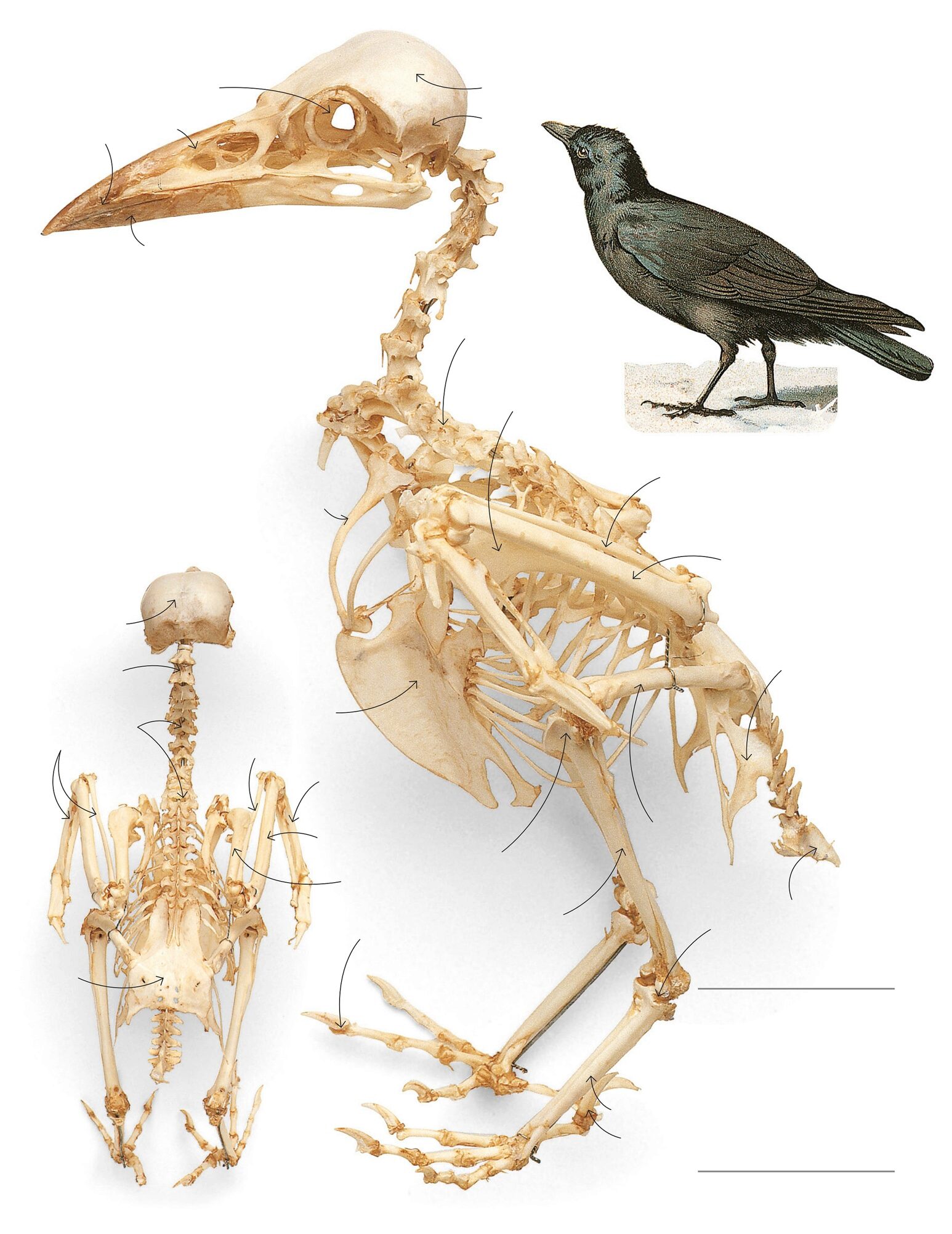
The bird skeleton
The most prominent feature
of the skeletons of flying birds is
the keel – a projection from the
breastbone that anchors the
wing muscles. The forelimbs
are adapted for flight, while
the beak (or bill) is used for
feeding and preening.
Nostril
Eye socket
Upper
beak
Lower beak
Cranium
Ear
Streamlined body
Although they differ in size, flying birds
like the crow all have a very similar
overall shape. This is because they
need to be streamlined and cannot
afford structures that would
make them weigh more.
Keel
Owls
have
remarkably flexible
necks and can
turn their
heads more
than 180°
.
Knee joint
Metatarsus